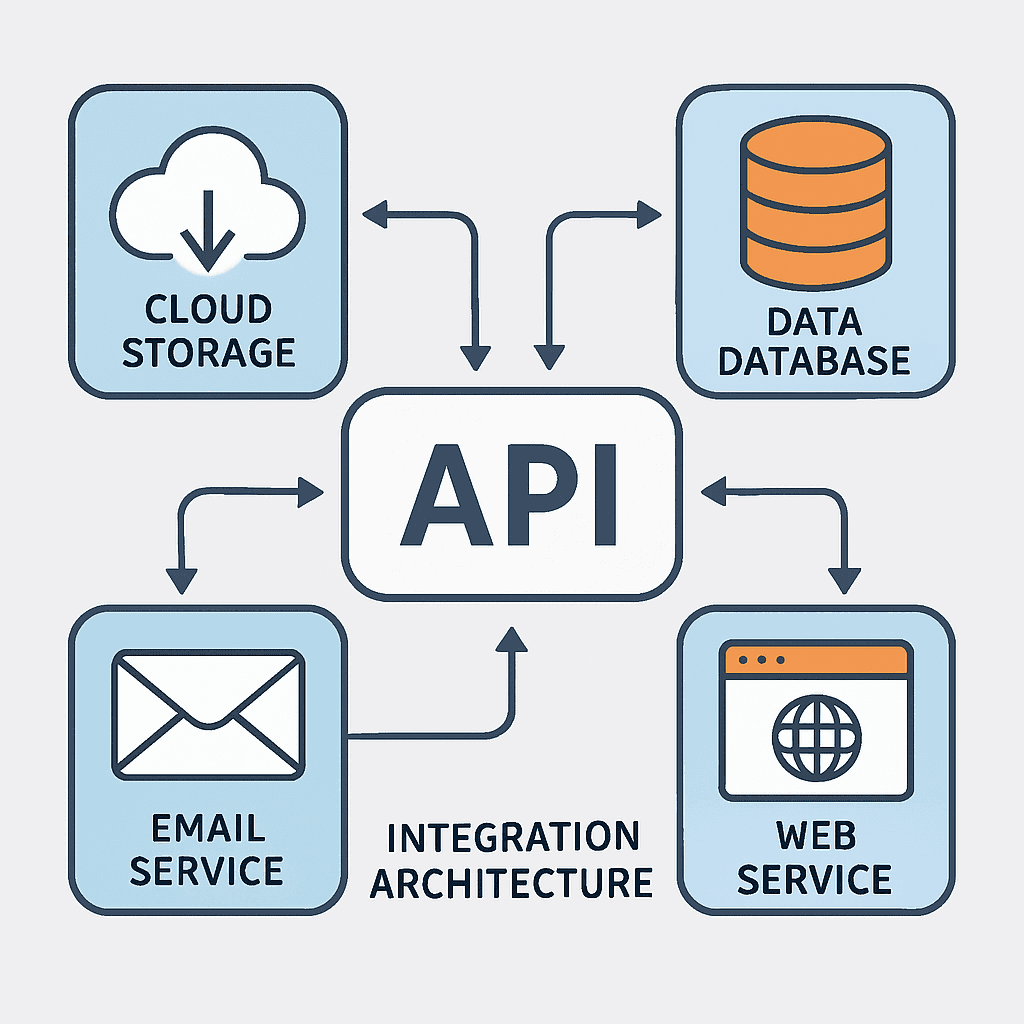
The technology stack powering your website is invisible to visitors — but it directly determines how fast, secure, scalable, and maintainable your website is. Choosing a modern, well-supported stack is one of the most important technical decisions for any business website.
Front-End Framework: Next.js and React Next.js is currently the gold standard for business websites and web applications. Built on React, it offers server-side rendering for fast initial loads, static site generation for pages that do not change often, and client-side interactivity where needed. It integrates natively with Vercel for edge-network delivery.
Why it matters: Next.js sites consistently achieve 95+ PageSpeed scores, load faster than WordPress counterparts, and handle traffic spikes gracefully.
Styling: Tailwind CSS Tailwind CSS is a utility-first CSS framework that enables precise, consistent design without writing custom CSS. It produces smaller CSS bundles than traditional frameworks, resulting in faster load times. It also enables rapid design iteration.
CMS: Headless Architecture Modern websites separate content management from the frontend, using "headless" CMSs like Sanity, Contentful, or Strapi. This means your content editors have an easy interface for updates while the public-facing website is built on a modern, fast framework — combining the best of both worlds.
Hosting: Vercel and Cloudflare Vercel (the company behind Next.js) offers globally distributed edge network hosting with automatic HTTPS, instant deployments, and excellent performance. Cloudflare adds an additional layer of security, CDN, and DDoS protection.
Database: PostgreSQL with Cloud Providers For websites that need a database — e-commerce, membership platforms, booking systems — PostgreSQL remains the most reliable choice. Providers like Neon (serverless PostgreSQL) and Supabase add developer-friendly tooling and automatic scaling.
Authentication: Modern Auth Providers For websites with user accounts, using a proven authentication solution (Auth.js, Clerk, Supabase Auth) is far safer than building authentication from scratch.
Analytics: Google Analytics 4 and Plausible GA4 for full-depth analytics and conversion tracking. Plausible as a privacy-first alternative for businesses that want cleaner data without third-party cookie concerns.
Schema Markup: JSON-LD Structured data using JSON-LD schema tells Google exactly what your content is — business information, FAQs, services, articles, reviews — helping you win rich snippets in search results.
Smart Screen Technology builds on this exact stack, ensuring every website we deliver is fast, secure, modern, and built to last.

Related Articles

Website Design UAE: Creating Digital Excellence for Your Business
Discover how professional website design in UAE can transform your business online presence and drive meaningful results.
Read article
Responsive Website Design: Essential for Modern Business Success
Learn why responsive design is critical and how it impacts your SEO rankings and user experience.
Read article
Modern Web Design Trends 2024: Create Stunning Websites
Discover the latest web design trends that make websites visually appealing, user-friendly, and conversion-focused.
Read article