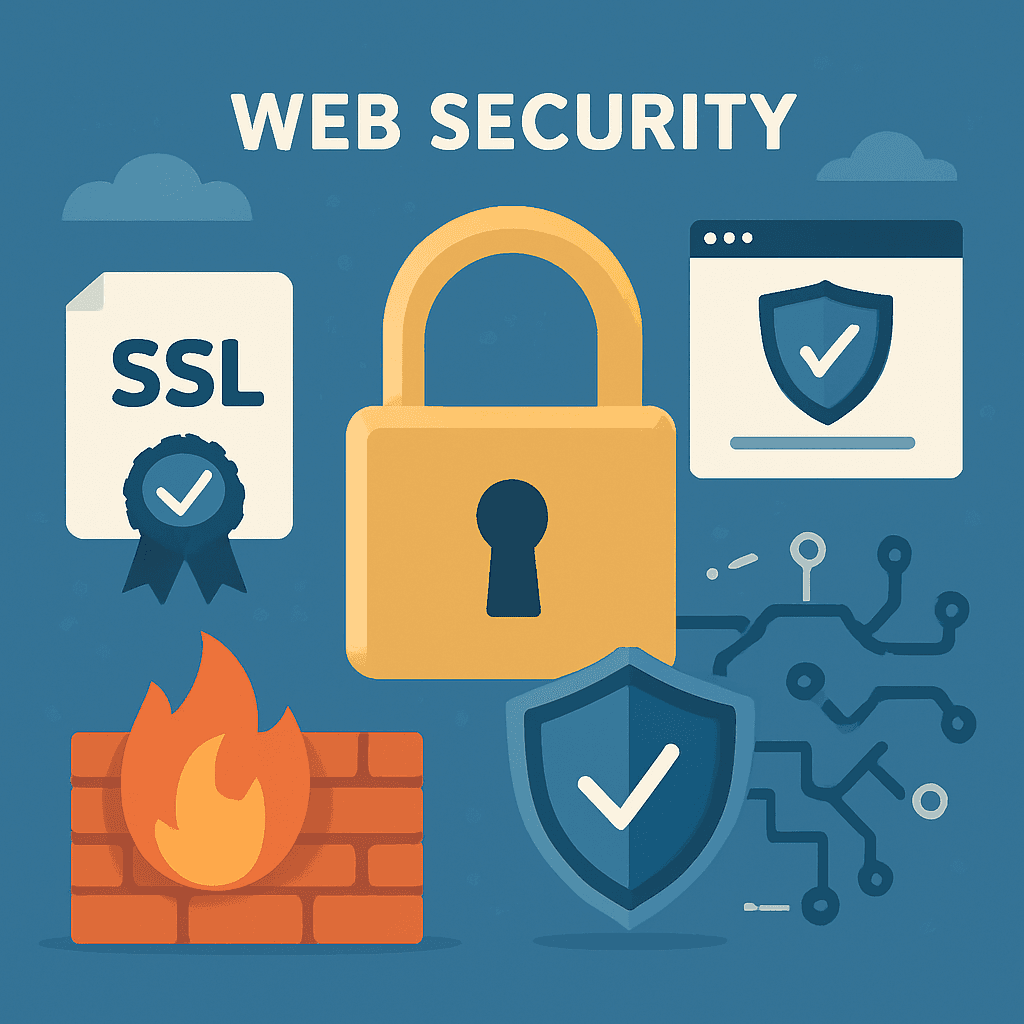
Website security is not a concern for large enterprises only. Small and medium businesses in Dubai and across the UAE are targeted daily by automated hacking tools looking for vulnerabilities — particularly on outdated WordPress installations, weak password setups, and websites running without SSL. A single breach can destroy years of brand building.
The Non-Negotiable Baseline
HTTPS / SSL Certificate Every business website must operate over HTTPS. SSL certificates encrypt data between your visitor's browser and your server, protecting contact form submissions, login credentials, and any payment information. Google marks HTTP sites as "Not Secure," actively discouraging visitors. Cost: free with Let's Encrypt or included with quality hosting.
Regular Software Updates If your website runs on a CMS like WordPress, every plugin, theme, and core installation must be kept updated. The majority of WordPress hacks exploit known vulnerabilities in outdated plugins. Set automatic updates or have your agency manage updates monthly.
Strong Password Policy Admin accounts should use long, random passwords and two-factor authentication (2FA). Never use "admin" as a username. This single measure prevents the majority of brute-force login attacks.
Daily Automated Backups Your website should be automatically backed up every 24 hours to an offsite location. If something goes wrong — a hack, a botched update, an accidental deletion — you should be able to restore to a clean version within minutes, not days.
Web Application Firewall (WAF) A WAF filters malicious traffic before it reaches your website, blocking SQL injection attempts, cross-site scripting (XSS), and bot attacks. Cloudflare's free plan provides excellent basic WAF protection.
Secure Contact Forms All forms should include CAPTCHA or honeypot fields to prevent spam submissions. Form submissions should never directly expose server details in error messages.
Content Security Policy (CSP) A CSP header tells browsers what content sources are legitimate for your site, preventing cross-site scripting attacks by refusing to execute scripts from unauthorised sources.
GDPR and UAE PDPL Compliance If you collect any visitor data, you must have a privacy policy, cookie consent mechanism, and data handling procedures compliant with UAE Personal Data Protection Law and, if you serve EU customers, GDPR.
Google Search Console Monitoring Set up Google Search Console and enable security issue alerts. Google will notify you if they detect malware or phishing content on your website.
Security is not a one-time setup — it requires ongoing monitoring and maintenance. Smart Screen Technology includes security management in all maintenance packages.

Related Articles

Website Design UAE: Creating Digital Excellence for Your Business
Discover how professional website design in UAE can transform your business online presence and drive meaningful results.
Read article
Responsive Website Design: Essential for Modern Business Success
Learn why responsive design is critical and how it impacts your SEO rankings and user experience.
Read article
Modern Web Design Trends 2024: Create Stunning Websites
Discover the latest web design trends that make websites visually appealing, user-friendly, and conversion-focused.
Read article