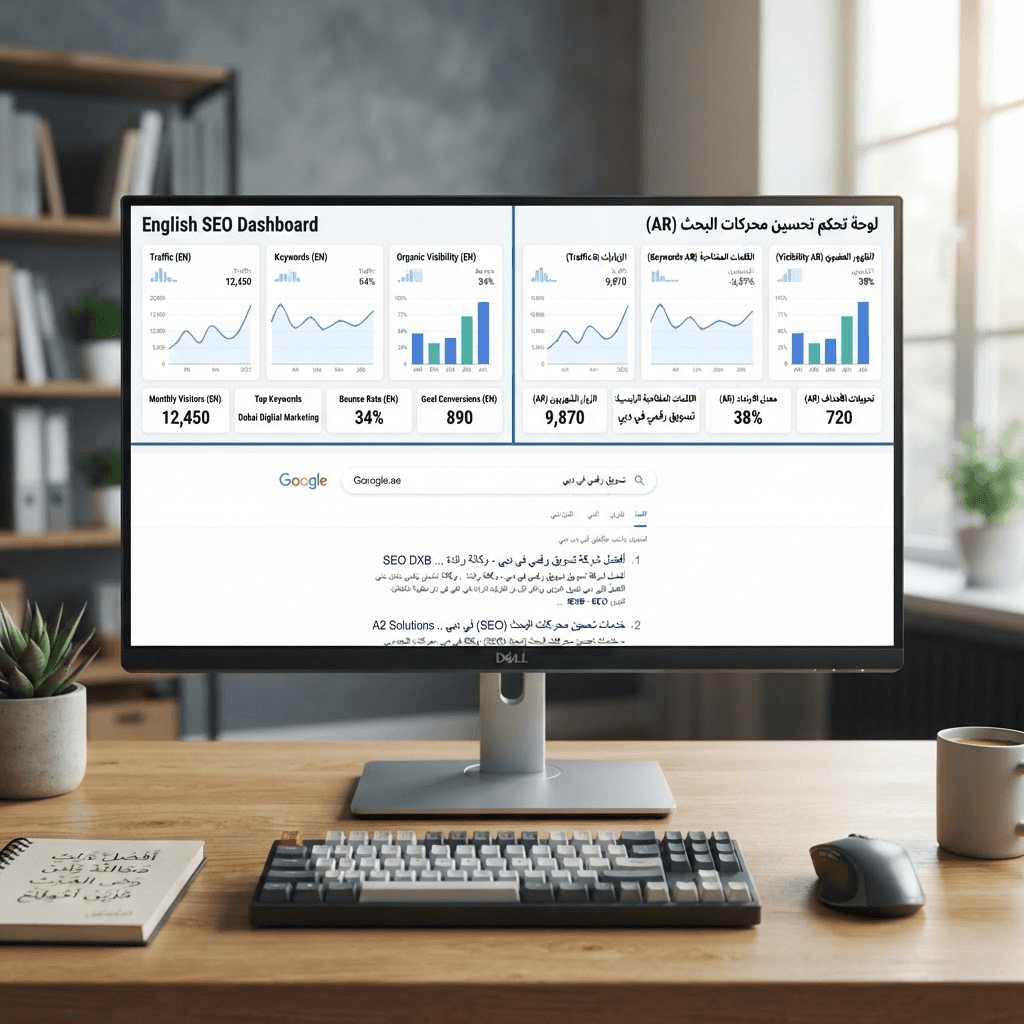
Building a proper Arabic website in Dubai is far more complex than simply translating English content and flipping the direction. True Arabic website design requires rethinking every layer of the interface.
RTL Layout: Every element — navigation, sidebars, icons, form fields, buttons — must mirror horizontally. CSS logical properties (margin-inline-start, padding-inline-end) are the correct approach, not hardcoded left/right values that break when language switches.
Arabic Typography: Not all Arabic fonts are equal. For body text, Noto Sans Arabic, IBM Plex Arabic, and Cairo offer excellent legibility at small sizes. Avoid decorative Naskh or Kufi fonts for anything smaller than 24px. Line height should be increased to 1.8–2.0 for Arabic body text (versus 1.5 for Latin) due to the vertical density of Arabic letterforms.
Bilingual CMS: Your content management system must support independent Arabic and English trees — separate slugs, separate meta titles, separate images where appropriate. WordPress with Polylang or WPML, or a custom Next.js site with i18n routing, are both valid approaches.
Arabic SEO: Google indexes Arabic content independently. Your Arabic pages need unique Arabic meta titles and descriptions (not translated from English), Arabic-language backlinks, and properly configured hreflang tags pointing between the language versions.
Smart Screen Technology builds Arabic-first bilingual websites for Dubai and UAE businesses with all of the above built in as standard.
Related Articles

Website Design UAE: Creating Digital Excellence for Your Business
Discover how professional website design in UAE can transform your business online presence and drive meaningful results.
Read article
Responsive Website Design: Essential for Modern Business Success
Learn why responsive design is critical and how it impacts your SEO rankings and user experience.
Read article
Modern Web Design Trends 2024: Create Stunning Websites
Discover the latest web design trends that make websites visually appealing, user-friendly, and conversion-focused.
Read article